
'At the heart of the strategic relationship between our countries are economic ties.'

'If it is your second car (electric vehicle), you typically keep it for travel within the city.' 'And the first car (internal combustion engine-run vehicles) can then be used to travel to some other cities.'
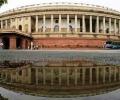
For the past few weeks, the government has been in an overdrive, pushing stuck projects with the larger aim to improve the country's economic growth, which had fallen to a four-year low of 4.4 per cent in the first quarter of this financial year.

Threshold limit of investment may come down for setting up semiconductor fabrication plants.
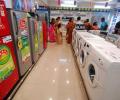
The industry is expecting double-digit growth on a year-on-year basis, helped by a possible price correction after softening of raw material inputs and factors such as positive sentiments, pent up demand and improving economic conditions. Besides, a shift in consumer behaviour from price consciousness towards technologically advanced premium products with quality, value proposition and safety aspects leading to a rise in demand for home automation products is making the industry upbeat. With the government's production linked incentive (PLI) scheme for white goods, which has witnessed a committed investment of Rs 4,614 crore, in place, many manufacturers are gearing up to make the most out of the opportunity as well as take steps towards reducing their dependency on imports and make products more affordable.

Stating that growth impulses and the fast-moving indicators are strong, Reserve Bank Governor Shaktikanta Das on Wednesday exuded confidence of the economy clipping at the projected 9.5 per cent this fiscal. Giving all the credit for the faster-than-expected recovery of the economy to the government, Das said the central bank has only been supporting the government in reviving the economy ravaged by the pandemic. Citing a slew of measures the government has taken since the pandemic struck in March 2020, the governor specifically mentioned tax cuts on fuels, tax resolution for the telecom sector, annulling of the retro tax legislation, sale of Air India, plans to sell some of the public sector banks and PLI scheme as the major reforms and growth-drivers bearing fruits now.
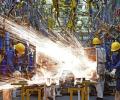
Operating margins for some companies dipped in Q3, 2021-22 but this sector could be nearing the bottom of the cycle in terms of profits.

Is self-reliance the right approach in a mega-buck game, or better to be part of a network? asks T N Ninan.

The Eknath Shinde-led Maharashtra government has come under fire following the Centre's announcement that Tata-Airbus C-295 transport aircraft project would be set up in Gujarat, with the opposition seeking to know why the project that was supposed to come up in Maharashtra went to the neighbouring state.

'The consolidation of the world's fifth-largest economy in the hands of 15-20 corporate giants is a once-in-generation event, which we are focusing on.'

Auto companies are now grappling with a slowdown in sales, triggered by pent up demand due to the COVID-led lockdown easing a bit and supply-side issues for raw material.

'For someone who wants to invest for the future or his family, diversification is necessary.' 'Diversify across asset classes -- equities, gold, real estate, fixed income, commodities, and even cryptocurrency.'

India's first advanced semiconductor fab facility would come up in Hyderabad, with Andhra Pradesh overtaking close contenders Karnataka and Tamil Nadu in the race.
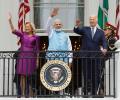
The constitution of both countries begins with the "three words -- We the People -- as President Biden just mentioned", said Modi, who is on his first state visit to the US.

'It is creditable that the BJP builds the organisation set-up and then looks for leaders.' 'The Congress on the other hand has to care for the leaders more than the organisation.'

A hallmark of some new businesses today is that they seek to use the brute force of capital, combined with smart technology and operations, to create new needs that you didn't even know existed, the chairman of Aditya Birla group said in a blog post on the trends for the new year.

India on Monday joined a US-led initiative to set up an Indo-Pacific Economic Framework to bind partner countries to achieve common goals, with Prime Minister Narendra Modi asserting that New Delhi will work with the stakeholders to make it an "inclusive and flexible" structure to pave the way for development, peace and prosperity in the region.

Analysts say it is a case of over-promise and under-delivery.

The soaring prices of metals like lithium, nickel and cobalt, which are the primary constituents of the cell, as well as supply chain bottlenecks, are also pushing up the cost of batteries
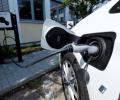
While traditional automakers in India are reeling under a global shortage of semiconductors, the country's electric vehicle (EV) makers, too, are now facing a shortage of lithium-ion batteries, a key raw material. The soaring prices of metals like lithium, nickel and cobalt, which are the primary constituents of the cell, as well as supply chain bottlenecks, are also pushing up the cost of batteries. Battery manufacturers say that prices have been increasing every quarter since the beginning of 2021.

Tata Motors plans to have 10 new battery electric vehicles (BEVs) in its domestic product portfolio by 2025 as it looks to drive its business model towards sustainable mobility going ahead, as per Tata Motors chairman N Chandrasekaran. In his message to the shareholders, he noted that the auto major aims to be amongst the world leaders in sustainable mobility solutions and as part of that it is also exploring tie-ups in cell and battery manufacturing to secure supplies for its portfolio of green vehicles. "In India, EV penetration in our portfolio has now doubled to 2 per cent this year and we expect penetration to increase exponentially in the coming years. "Tata Motors will lead this change in the Indian market. By 2025, Tata Motors will have 10 new BEV vehicles and as a Group, we will invest proactively to set up charging infrastructure across the country," Chandrasekaran informed shareholders in the company's Annual Report for 2020-21.
Major investment plans for a fabrication facility have put off due to the slowdown. A full-fledged fab requires an investment of $3-4 bn. Moreover, even if a fab were to come up now in the country, the technology would be rendered obsolete by the time it starts production. "If the government was serious about making the electronics manufacturing ecosystem robust, why is it sitting on proposals? How can you sustain a company's interest for so long?" asks an industry source.

LCD displays could be produced in India in the near future.
The Videocon group, the country's largest consumer electronics and durables manufacturer, is contemplating setting up a semiconductor facility.

Reliance's big-bang entry across the solar ecosystem will cut dependence on Chinese imports drastically. And Ambani's repeated emphasis that RIL's new energy foray will be 'a truly global business' points that his group is playing not just for a share of the Indian pie but to be the OEM in the larger 5,000 GW global market by 2030, points out Shailesh Dobhal.

Given the security dilemma prevailing between India and China, India should curb the operation of Chinese telecom companies in India, asserts Dr Rup Narayan Das.

The Reserve Bank on Friday retained the GDP forecast for the current financial year at 9.5 per cent and flagged global semiconductor shortages, elevated commodity prices and potential global financial market volatility as downside risks to economic growth. In his address after the three-day meeting of the rate-setting panel, RBI Governor Shaktikanta Das said recovery in aggregate demand gathered pace in August-September, and it is reflected in high-frequency indicators, like railway freight traffic; port cargo; cement production; electricity demand; e-way bills; GST and toll collections. "The ebbing of infections, together with improving consumer confidence, has been supporting private consumption," he said, and added the pent-up demand and the festival season should give further fillip to urban demand in the second half of the financial year.
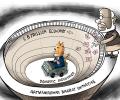
The Indian economy is on the path of a durable recovery on the back of conducive monetary and credit conditions, the global headwinds notwithstanding, said a Reserve Bank of India (RBI) article on the state of the economy. Domestically, there have been several positives on the COVID-19 front, in terms of reduced infections and faster vaccinations, the article published in the RBI Bulletin November 2021 added. The Indian economy, the article said, is clearly differentiating itself from the global situation, which is marred by supply disruptions, stubborn inflation and surges of infections in various parts of the world.
Infineon currently has an employee base of 550 and proposes to scale it up to 800 in the next one-and-half-years.

Andhra Pradesh Chief Minister N Chandrababu Naidu, who was instrumental in developing Hyderabad as a key information technology services destination in the country, is now embarking upon a mission to establish the state as an electronics manufacturing hub.

'It is in electronics that the gap between where we are and where we need to be is most obvious and most persistent.' 'It is not only a national security issue, but also a commercial issue,' argues Rajeev Srinivasan.

10 stocks which are most popular with brokerages right now and are expected to deliver maximum upside over the next 12 months.

Hemant Shivsaran lists the number of projects the Modi government has announced since August to woo Gujarat voters.

'Students tell me their parents are fine with them either joining a start up or even starting one. This was not the case 10 years ago.'

'Wherever in the world there is political instability, those countries are beset with severe crises today. But India is in a much better position than the rest of the world due to the decisions taken by my government in the national interest,' President Droupadi Murmu said in her address to both Houses of Parliament.
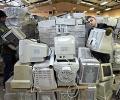
Estimates suggest subsidy outgo on these proposals would be at least Rs 1,000 crore
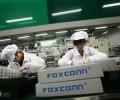
The project, code-named MF101 by Foxconn, will be spread across 1,500 acres at Talegaon or Khopoli.
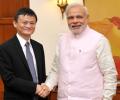
Alibaba's pervasive economic and social influence in China is seen as a threat to the authority of the Chinese Communist party, notes Shyam Saran.
